← Back to The ChronicleThe Craft
The CraftNovember 8, 2026•9 MIN MASTERCLASS
The Infrared Monolith: Greig Fraser's Optical Architecture in 'Dune: Part Two'
How Denis Villeneuve and Greig Fraser used converted infrared ARRI sensors, customized 1960s Soviet glass, and dual IMAX geometries to reinvent epic science fiction.

Shinde AdityaAUTEUR
@heyshinde•Auteur • Cinematography & Optical Craft
Subject Film: Dune: Part Two (2024)

FRAME 01
1.43:1 (IMAX 70mm / Dual Laser) & 1.90:1 (Digital IMAX) & 2.39:1 Scope
❝Giedi Prime arena sequence: Captured natively on a full-spectrum infrared ARRI Alexa LF with physical IR-pass filtration under black sun illumination.
CINEMATOGRAPHY & OPTICAL SPEC SHEET
STUDIO DECONSTRUCTION
📷 CAMERA SENSORARRI Alexa 65 & Custom Infrared-Modified Alexa LF (Filmed for IMAX)
🔍 OPTICAL GLASS / LENSESRehoused Vintage 1960s Soviet Glass (Helios 44-2, Jupiter) & ARRI Moviecam
📐 ASPECT RATIO1.43:1 (IMAX 70mm / Dual Laser) & 1.90:1 (Digital IMAX) & 2.39:1 Scope
💡 LIGHTING ARCHITECTURENatural Desert Ambient Bounce & 720nm/850nm Infrared High-Output Arrays
🎨 COLOR PIPELINEHybrid Digital-to-Photochemical Film-Out (35mm Kodak 5207 Scan-Back)
🎞️ GAUGE / CAPTURE MEDIUMLarge Format Digital ARRIRAW (6.5K & 4.5K) transferred to 35mm Celluloid
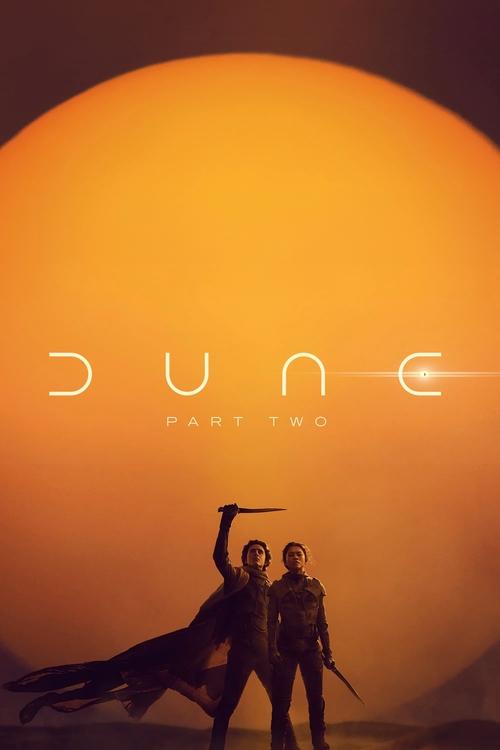
FEATURED FILM2024
Dune: Part Two
Dir. Denis Villeneuve • DP. Greig Fraser
The Cinema of Tangible Weight: Beyond Virtual Production
In an era where contemporary science-fiction franchises have surrendered tactile reality to green-screen soundstages and volume-wall LED volumes, director Denis Villeneuve and director of photography Greig Fraser, ASC, ACS (The Batman, Rogue One, Lion) executed an antithetical visual philosophy for Dune: Part Two. Their mandate was absolute: every frame of Arrakis and Giedi Prime must register with physical mass, environmental friction, and optical imperfection. Rather than engineering flawless CGI landscapes, Fraser transformed the camera itself into an experimental instrument—physically ripping out sensor filters, rehousing idiosyncratic 1960s Soviet portrait glass, and inventing an in-camera infrared visual vernacular that stands as one of the most singular achievements in modern large-format cinema."If you shoot an actor against a blue screen in London, their eyes know there is no horizon. If you place them in the dunes of Wadi Rum at 115 degrees, with real mineral sand grinding against the camera chassis and stinging their retinas, the lens captures biological truth."
— Greig Fraser, ASC, ACS
1. The Giedi Prime Revolution: Physical Infrared Sensor Modification
The gladiatorial arena sequence on Giedi Prime—introducing Austin Butler as Feyd-Rautha Harkonnen—represents the most audacious technical gamble in recent Hollywood cinematography. In Frank Herbert's prose, Giedi Prime orbits a dying, heavily industrialized sun whose radiation washes out natural human perception. Villeneuve and Fraser refused the standard post-production solution of simply desaturating color footage in a digital grading suite, which invariably produces muddy, homogeneous gray flesh tones. Instead, Fraser engineered a genuine in-camera optical capture of non-visible light.
Giedi Prime Optical Configuration
OPTICAL DOSSIER
Camera Body
ARRI Alexa LF (Modified Full-Spectrum Sensor)
Optical Modification
Physical Removal of Internal IR-Cut Filter / OLPF
Front Filtration
720nm & 850nm Deep Infrared Pass Filters
Lighting Key
Custom 100kW Tungsten & Infrared High-Output Emitting Arrays
Effect
Translucent Human Melanin, Total Vein Suppression, Lightless Obsidian Sky
How the Physics of Infrared Transformed the Harkonnens:
2. The Optical Philosophy: Why Soviet 1960s Glass Beat $100K Modern Lenses
Modern cinema lenses from manufacturers like Zeiss and Cooke are marvels of clinical optical engineering: zero chromatic aberration, perfect edge-to-edge sharpness, and total flare suppression. For Dune: Part Two, Fraser considered this pristine sharpness the enemy of myth. To temper the hyper-resolving sensor of the ARRI Alexa 65 (65mm large-format sensor), Fraser collaborated with ARRI Rental's optical technicians to assemble a Frankensteinian lens package dominated by rehoused 1960s Soviet-era glass:
The Optical Architecture of Arrakis
OPTICAL DOSSIER
Primary Capture Sensor
ARRI Alexa 65 (6560 x 3102 ARRIRAW Open Gate)
Secondary Combat Unit
ARRI Alexa Mini LF (4448 x 3096 Open Gate)
Hero Lenses
Rehoused Soviet Helios 44-2 (58mm), Jupiter-9 (85mm), ARRI Moviecam
Key Characteristics
Swirly Petzval Edge Falloff, De-coated Flare Susceptibility
3. Natural Desert Lighting: Abandoning Massive Overhead Diffusion Silks
Standard commercial filmmaking in desert environments relies on enormous crane-supported diffusion frames (20x20 or 40x40 silks) floating over actors to kill the midday sun. This creates a flat, artificial, television-commercial softness that completely undermines the predatory cruelty of Arrakis's desert climate. Fraser banned overhead diffusion frames entirely. Instead, production was governed by strict solar astronomy:4. The IMAX Dual-Aspect Ratio Architecture (1.43:1 vs 1.90:1)
Dune: Part Two is one of the rare films in cinema history to embrace the monumental 1.43:1 full-height IMAX aspect ratio for its most transcendent sequences.
Exhibition Framing Matrix
OPTICAL DOSSIER
IMAX 70mm & Dual-Laser
1.43:1 Full Height (Desert Expanse, Shai-Hulud Rides)
Digital IMAX Theaters
1.90:1 Expanded Vertical Geometry
Standard Theatrical Scope
2.39:1 Anamorphic Widescreen
5. The Photochemical Hybrid Pipeline: Digital Capture $\rightarrow$ 35mm Celluloid $\rightarrow$ 4K Scan
Perhaps Fraser and Villeneuve's most influential technical innovation is their Film-Out / Film-In hybrid color pipeline, developed in partnership with senior colorist Dave Cole at FotoKem. Rather than choosing between the hyper-convenience and dynamic range of modern digital cameras or the organic texture of analog celluloid, they fused both mediums:Why Digital Grain Plug-ins Cannot Replicate This:
Digital grain algorithms apply a mathematical procedural noise layer over pixels. Real film-out processing forces light through physical gelatin emulsion:The Verdict: The Defining Visual Landmark of 2020s Cinema
With Dune: Part Two, Denis Villeneuve and Greig Fraser have established a new benchmark for epic visual grammar. By combining the cutting edge of large-format digital sensors with vintage Soviet optics, in-camera infrared physics, and real photochemical grain, they demonstrated that cinematic scale is not a matter of budget or computer graphics—it is an act of uncompromising optical conviction. Dune: Part Two will be studied in film academies and cinematographic societies for decades as the definitive bridge between 20th-century analog craft and 21st-century digital architecture.Enjoyed this analysis? Share with other cinematographers & screenwriters.
Subscribe to The Cinema Chronicle
Weekly deep dives into cinematography, directorial grammar, and screenwriting craft delivered every Sunday.